154
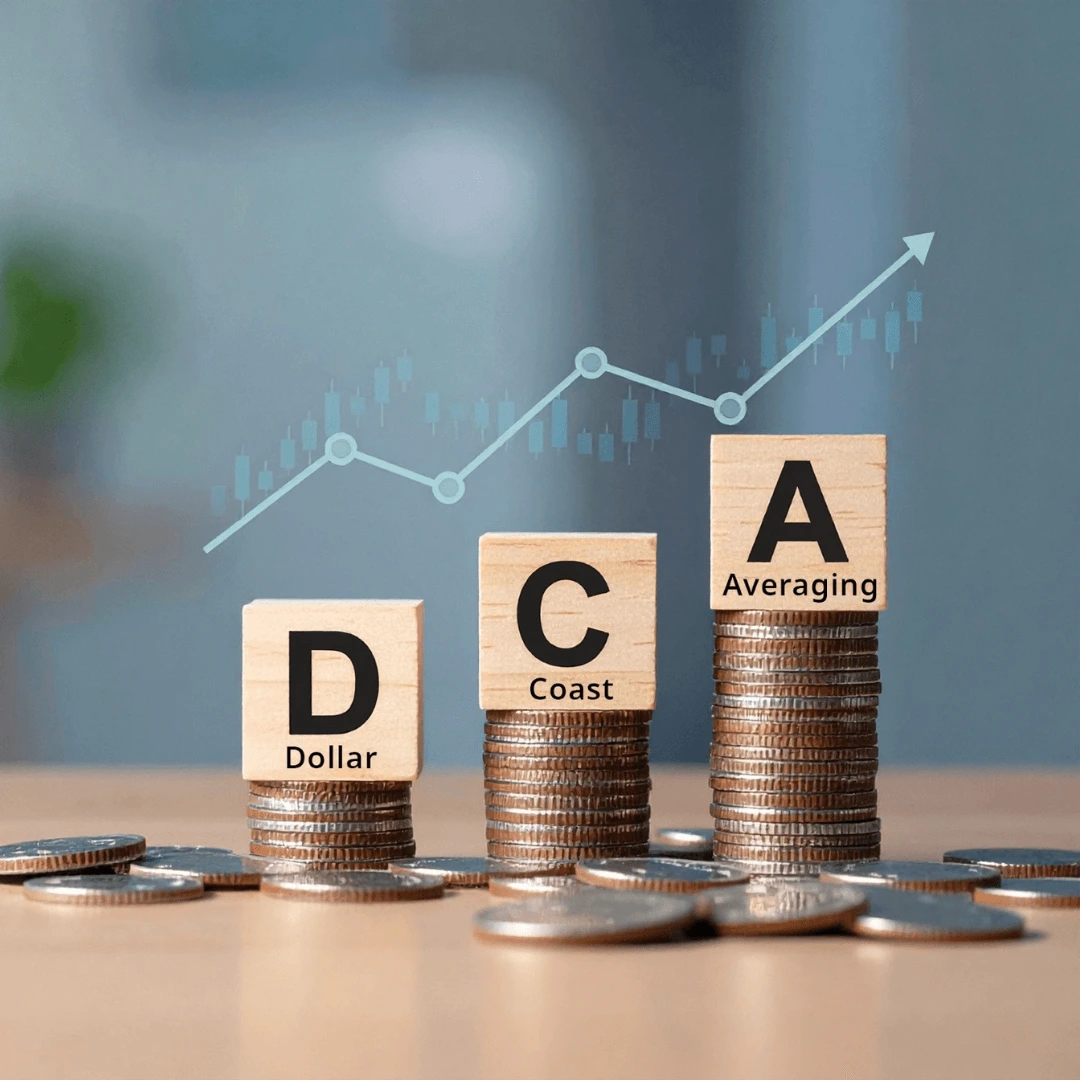
Investing in the financial markets often feels like an intimidating puzzle for beginners and seasoned participants alike. New investors frequently freeze up, paralyzed by the fear of buying at the absolute peak of a market cycle. This anxiety stems from an obsession with market timing, which is the nearly impossible practice of predicting when stocks, bonds, or cryptocurrencies will reach their lowest or highest valuation points. Fortunately, a disciplined and straightforward strategy exists to bypass this stress entirely. It is known as dollar-cost averaging. By shifting the focus from perfect timing to consistent execution, investors can build wealth steadily while insulating themselves from the emotional turbulence of short-term market swings.
How Dollar-Cost Averaging Works
To understand the mechanics of dollar-cost averaging, one must first look at how traditional lump-sum investing differs from regular contributions. Instead of deploying a massive pool of cash all at once, an investor commits a fixed amount of capital at regular and predetermined intervals. These intervals might occur weekly, bi-weekly, or monthly, and the purchases happen regardless of whether the broader market is booming or crashing.
Consider a practical illustration of this concept. Suppose an investor decides to allocate one hundred dollars every month into a specific equity fund.
-
In January, when the share price is ten dollars, that one hundred dollars purchases ten shares.
-
In February, a market downturn hits, causing the share price to drop to five dollars. The exact same one hundred dollars now purchases twenty shares.
-
In March, the market rebounds slightly, and the share price rises to twenty dollars, allowing the one hundred dollars to purchase five shares.
Over these three months, the investor spent three hundred dollars in total and accumulated thirty-five shares. This results in an average cost of approximately eight dollars and fifty-seven cents per share, which is lower than the simple arithmetic average of the share prices during those three months. This mechanical advantage is the core engine driving the strategy.
The Mathematical Advantage Behind the Strategy
The primary reason dollar-cost averaging succeeds mathematically is rooted in the inverse relationship between share prices and purchasing power. When prices fall, your fixed dollar amount automatically buys more shares or units. Conversely, when prices rise, your fixed amount buys fewer shares.
Over a long investment horizon, this dynamic ensures that you naturally acquire a larger volume of assets when they are on sale during market dips. When the market eventually recovers and trends upward, those accumulated shares amplify your overall portfolio growth. This structural feature removes the pressure of identifying the exact bottom of a correction. You do not need to know when a bear market will end because the strategy automatically capitalizes on lower prices as they happen.
The Psychological Benefits of Consistent Investing
Investing is just as much a psychological challenge as it is a financial one. Human beings are hardwired to react emotionally to danger and reward, which often translates to panic selling during steep market declines and chasing performance by buying near the top of speculative manias.
Dollar-cost averaging acts as a behavioral guardrail. Because the investment execution happens automatically through scheduled transfers, there is no agonizing over whether today is an optimal day to deploy capital or if a catastrophic crash is looming around the corner. This systematic approach fosters enduring financial discipline. It transforms investing from a stressful, high-stakes decision into a passive, routine habit, protecting investors from their own worst impulses.
Comparing Dollar-Cost Averaging and Lump-Sum Investing
While dollar-cost averaging is widely praised for its safety and simplicity, financial researchers often point out a notable nuance. Statistically speaking, lump-sum investing—deploying all available cash immediately—tends to outperform dollar-cost averaging in rising markets because your capital spends more time exposed to market returns.
However, lump-sum investing carries a heavy psychological burden. If a severe market correction occurs immediately after a lump-sum deployment, the investor suffers an instant, steep paper loss that can trigger intense regret and potential panic selling. Dollar-cost averaging mitigates this regret risk. For the average retail investor who values peace of mind and steady accumulation over statistical optimization in a rising environment, the psychological protection provided by systematic investing far outweighs the theoretical mathematical edge of a lump-sum approach.
Potential Drawbacks and Limitations
No financial strategy is entirely without flaws, and dollar-cost averaging is no exception. Recognizing its limitations helps investors maintain realistic expectations.
-
Opportunity Cost in Bull Markets: If you hold a large amount of cash on the sidelines and deploy it gradually during a sustained, uninterrupted bull market, you will miss out on the full gains that an immediate lump-sum investment would have captured.
-
Friction and Transaction Costs: Historically, executing multiple small trades incurred heavy brokerage commissions that could erode returns. While modern brokerages offering commission-free trading and fractional shares have largely neutralized this issue, investors must still ensure their chosen platform does not charge hidden fees for recurring deposits.
-
Cash Drag: Keeping money uninvested while waiting for scheduled purchase dates means that cash is not working for you immediately, which can slightly drag down overall portfolio performance over decades.
Who Benefits Most from This Strategy?
Dollar-cost averaging is exceptionally well-suited for specific types of participants in the financial ecosystem. Salaried employees find this method aligns naturally with their regular income cycle, allowing them to automate contributions straight from their paychecks into retirement accounts or brokerage portfolios.
It is also an invaluable tool for beginners who lack the financial literacy or confidence to navigate complex market valuations. By removing the burden of asset valuation and timing, new participants can build a diversified portfolio safely. Finally, risk-averse individuals who value predictability and want to grow wealth gradually without checking ticker symbols every single day will find immense utility in this disciplined framework.
Frequently Asked Questions
Can dollar-cost averaging be applied to individual stocks or is it strictly for index funds and mutual funds?
Dollar-cost averaging can be applied to individual stocks, but doing so carries unique risks compared to using it for diversified index funds or exchange-traded funds. If you apply a regular purchase schedule to a single company that suffers structural business decline or bankruptcy, you will continuously buy shares of a failing enterprise. Broad-based index funds naturally mitigate this single-stock risk, making them safer vehicles for systematic accumulation.
How does dividend reinvestment interact with an ongoing dollar-cost averaging plan?
Dividend reinvestment programs automatically use payouts generated by your portfolio holdings to purchase additional shares of the same asset. This functions similarly to dollar-cost averaging by continuously increasing your share count over time without requiring fresh capital injections. When combined with a regular cash-funded accumulation schedule, dividend reinvestment accelerates the compounding effect within your portfolio.
Is there an optimal frequency for executing purchases such as weekly versus monthly?
Financial studies comparing weekly, bi-weekly, and monthly purchase frequencies generally show minimal long-term performance differences. The choice largely depends on your personal income schedule. Aligning your investment purchases with your pay frequency—whether that is every week or twice a month—is usually the most practical choice because it automates the process before discretionary spending can interfere.
How do taxes impact transactions made through a regular dollar-cost averaging schedule in a taxable account?
In a standard taxable brokerage account, every time you sell an asset, you trigger a taxable event subject to capital gains rules. However, simply buying assets through a dollar-cost averaging plan does not trigger taxes. Taxes only apply when you eventually sell those shares for a profit. Tracking the purchase date and cost basis of each individual share batch can require detailed record-keeping if you do not use specific identification accounting methods.
Does dollar-cost averaging work effectively during prolonged periods of sideways or stagnant market movement?
During prolonged sideways markets where asset prices fluctuate within a narrow band without significant upward or downward trends, dollar-cost averaging performs exceptionally well. Because prices bounce up and down repeatedly within that range, your fixed dollar contributions continuously accumulate shares at lower relative prices during the dips, setting up a powerful profit base for when the market eventually breaks out of its stagnation.
Can automated dollar-cost averaging platforms trigger unintended wash-sale rules in taxable portfolios?
Automated recurring purchases in taxable accounts generally do not trigger wash-sale rules because wash sales specifically apply to capital losses realized when selling a security and buying a substantially identical one within a thirty-day window. Since dollar-cost averaging involves continuous buying rather than realizing tax losses through selling, standard purchase plans remain safe from these specific tax complications.
How do changing interest rate environments influence the effectiveness of a dollar-cost averaging strategy?
Macroeconomic shifts in interest rates directly affect asset valuations, particularly in growth stocks and fixed-income securities. When interest rates rise, asset prices often pull back as borrowing costs increase. For an investor using dollar-cost averaging, a rising interest rate environment can act as a beneficial catalyst, allowing regular contributions to purchase discounted assets during market contractions caused by tightening monetary policy.
