128
Modern life often requires us to sit at desks for hours, hunch over smartphones, and move in repetitive, linear patterns. Yet, the human body was engineered for a diverse range of physical challenges. From carrying heavy grocery bags up three flights of stairs to chasing after a toddler or lifting a heavy box into a car trunk, physical demands do not resemble isolated exercises performed on specialized gym machines. Instead, they require integrated strength, balance, coordination, and mobility. This is where functional fitness enters the picture. By training the body for real-life movements rather than isolated muscle groups, functional fitness bridges the gap between gym performance and daily vitality.
What is Functional Fitness?
Functional fitness is a classification of training that prepares the body for daily activities in real-life scenarios. Rather than focusing on lifting a specific amount of weight while sitting on a cushioned bench, functional training prioritizes multi-joint, multi-planar movements. It engages your core, improves your neuromuscular coordination, and enhances your overall stability.
Traditional bodybuilding often isolates muscles, such as working only the biceps or the quadriceps. While this approach has merits for specific aesthetic or strength goals, it rarely translates directly into the dynamic movements required outside the gym. Functional fitness builds a resilient body that handles everyday physical stress efficiently, drastically reducing the risk of injury both inside and outside the workplace.
The Core Pillars of Functional Movement Patterns
To understand how functional fitness transforms daily life, you must look at the fundamental movement patterns that humans perform every day. Training programs centered around these patterns ensure complete physical preparedness.
-
The Squat: This pattern mimics sitting down and standing up from a chair, getting out of a low car, or picking an object off the floor. It heavily recruits the hips, glutes, quadriceps, and core.
-
The Hinge: Distinct from a squat, the hinge involves bending primarily at the hips with a minimal knee bend, resembling picking up a laundry basket or tying your shoes. It targets the posterior chain, including the hamstrings and lower back.
-
The Push: Pushing movements translate to opening a heavy door, pushing a lawnmower, or putting an item onto a high shelf. These engage the chest, shoulders, and triceps.
-
The Pull: Pulling mirrors actions like opening a heavy gate, starting a lawnmower cord, or pulling yourself up a flight of stairs. This pattern targets the upper back and biceps.
-
The Carry: The farmer carry represents one of the most practical movements in existence. Carrying groceries, luggage, or children requires immense grip strength, core stabilization, and postural endurance.
-
Rotation and Anti-Rotation: Twisting to look behind you, swinging a golf club, or preventing your spine from twisting when carrying a heavy load on one side requires robust rotational stability.
Essential Exercises for Everyday Strength
Integrating functional exercises into your routine does not require an expensive gym membership or complex equipment. Many of these movements rely exclusively on body weight or simple resistance tools like kettlebells and resistance bands.
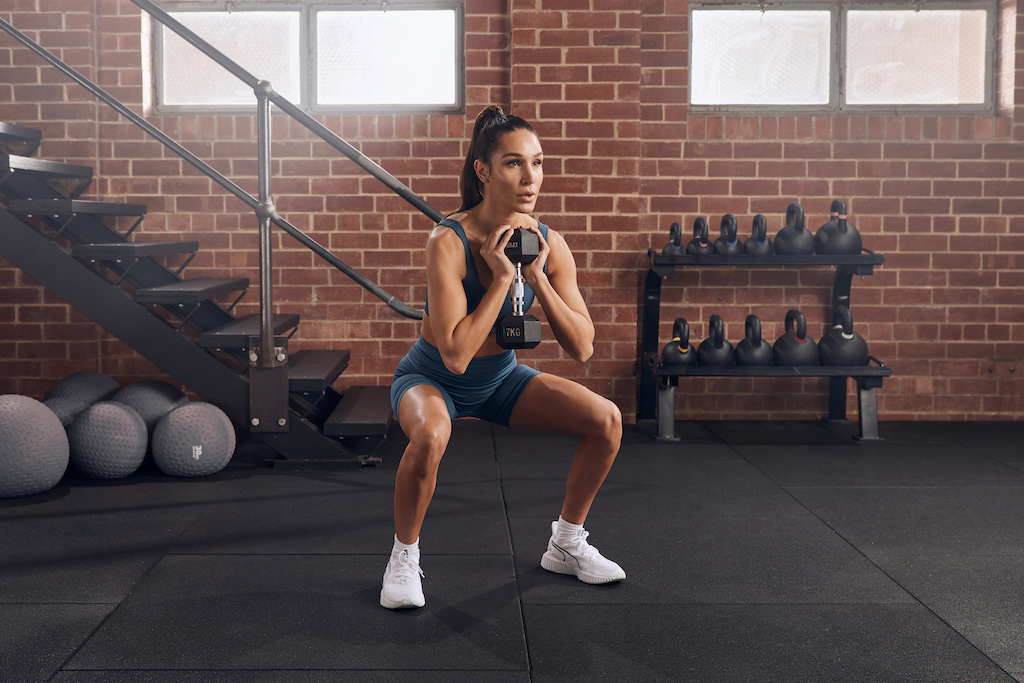
1. The Goblet Squat
The goblet squat serves as an accessible entry point for mastering deep, safe squat mechanics. Holding a kettlebell or dumbbell close to your chest naturally encourages an upright posture, keeping your chest open and your spine neutral throughout the movement.
-
How to perform: Stand with your feet slightly wider than shoulder-width apart. Hold a weight vertically against your chest with both hands. Inhale, push your hips back, and bend your knees to lower your body as far as comfortable while keeping your heels flat on the floor. Exhale and drive through your midfoot to return to the starting position, squeezing your glutes at the top.
-
Everyday benefit: Makes standing up from deep sofas, getting out of low vehicles, and rising from the floor effortless and pain-free.
2. The Kettlebell Deadlift
The deadlift is the ultimate test of the hip hinge. By teaching your body to hinge properly, you protect your lower back from injury when lifting heavy loads from the ground.
-
How to perform: Place a kettlebell on the floor between your feet. Stand with your feet hip-width apart. Hinge at your hips, push your glutes backward, bend your knees slightly, and grip the handle with both hands. Keep your spine neutral and your core braced. Drive your feet into the floor, extend your hips, and stand tall. Reverse the motion to lower the weight back down.
-
Everyday benefit: Prevents lower back strain when lifting laundry baskets, moving furniture, or picking up pets and children from the floor.
3. The Farmer Carry
Few exercises build brute functional strength and mental toughness quite like the farmer carry. It challenges your cardiovascular system, grip strength, and core stability simultaneously.
-
How to perform: Grab a pair of heavy dumbbells or kettlebells. Stand tall with your shoulders back and down, and your core tight. Walk forward with controlled, deliberate steps for a designated distance or time, ensuring your torso does not lean to either side.
-
Everyday benefit: Makes carrying multiple grocery bags from the car to the kitchen in a single trip remarkably easy.
4. The Plank with Shoulder Tap
Core stability is the foundation of all functional movement. A standard plank builds static endurance, but adding shoulder taps introduces an anti-rotation challenge that forces your oblique muscles to stabilize your pelvis.
-
How to perform: Begin in a high plank position with your hands directly beneath your shoulders and your body forming a straight line from your head to your heels. Keeping your hips as stable as possible, lift your right hand and tap your left shoulder. Return it to the floor and repeat on the opposite side.
-
Everyday benefit: Improves posture, protects your spine during twisting motions, and stabilizes your torso when reaching across your body.
5. The Step-Up
Unilateral leg training is crucial because life rarely happens with both feet planted symmetrically on the ground. Step-ups build single-leg stability, quadricep strength, and balance.
-
How to perform: Stand facing a sturdy box or bench. Place your right foot entirely on top of the surface. Drive through your right heel to lift your body up, bringing your left foot to meet the right. Slowly lower your left foot back down to the floor, maintaining control throughout the descent. Complete all reps on one side before switching.
-
Everyday benefit: Makes climbing stairs, stepping over obstacles, and hiking uphill significantly easier and less fatiguing.
Building a Functional Fitness Routine
Designing a sustainable functional fitness program requires balancing strength, mobility, and recovery. You do not need to spend hours in the gym every day. Consistency and movement quality matter far more than training volume.
Frequency and Volume
Aim for three to four functional strength sessions per week, lasting between thirty to forty-five minutes each. Incorporate compound movements that recruit multiple muscle groups simultaneously, allowing you to achieve a comprehensive full-body workout in a shorter timeframe.
Progressive Overload
As your body adapts to these movements, you must gradually increase the challenge to continue seeing improvements. You can achieve this by adding repetitions, increasing the weight of the resistance tools, slowing down the tempo of the exercise, or decreasing rest times between sets.
Mobility and Flexibility Integration
Functional strength means little if your joints possess restricted ranges of motion. Dedicate ten minutes before every workout to dynamic stretching and mobility drills, such as hip openers, thoracic spine rotations, and ankle mobility exercises. This ensures your joints move freely and reduces the likelihood of strains during daily tasks.
Long-Term Benefits of Functional Training
Embracing a functional fitness lifestyle yields profound dividends that extend well into your later years. The advantages go far beyond simple physical appearance or athletic performance.
-
Enhanced Balance and Fall Prevention: As people age, balance naturally declines. Functional training targets the stabilizing muscles and proprioceptive systems, significantly reducing the risk of slips, trips, and dangerous falls.
-
Joint Longevity: By training muscles to support joints through their natural ranges of motion, functional fitness distributes physical loads evenly, reducing wear and tear on cartilage and ligaments.
-
Metabolic Health: Multi-joint compound movements demand substantial energy, elevating your heart rate and boosting caloric expenditure both during and after your workout.
-
Improved Posture: Office jobs and sedentary habits often lead to rounded shoulders and tight hip flexors. Functional training corrects postural imbalances, relieving chronic neck and lower back discomfort.
Frequently Asked Questions
Can beginners perform functional fitness exercises safely?
Yes, functional fitness is exceptionally scalable. Beginners can start using strictly body weight against gravity, focusing entirely on movement mechanics and range of motion before adding external resistance like dumbbells or kettlebells.
Do I need a gym membership to practice functional training?
A gym membership is entirely optional. Most functional exercises utilize body weight or affordable equipment such as resistance bands, medicine balls, or a single kettlebell, making home workouts or outdoor park training highly effective.
How soon will I notice improvements in my daily life?
Most people notice tangible improvements in their energy levels, posture, and body awareness within two to three weeks of consistent training. Physical strength gains and reduced joint stiffness typically become apparent within four to six weeks.
Is functional fitness appropriate for older adults?
Functional fitness is ideal for older adults because it directly preserves functional independence. Movements that mimic getting out of a chair or carrying objects help seniors maintain the physical capacity required for daily living without assistance.
How does functional training differ from traditional weightlifting?
Traditional weightlifting often isolates individual muscles using machines or seated postures to maximize muscle size or specific strength metrics. Functional training emphasizes standing, multi-joint, and multi-planar movements that improve coordination, balance, and real-world physical capability.
Can functional fitness help with weight loss?
Because functional training incorporates full-body compound movements that engage large muscle groups, it burns a high number of calories during workouts and builds metabolically active muscle tissue, which supports sustainable long-term weight management.
